Home / Thirty changes / One part of the shape changed / The Umbrian hill country
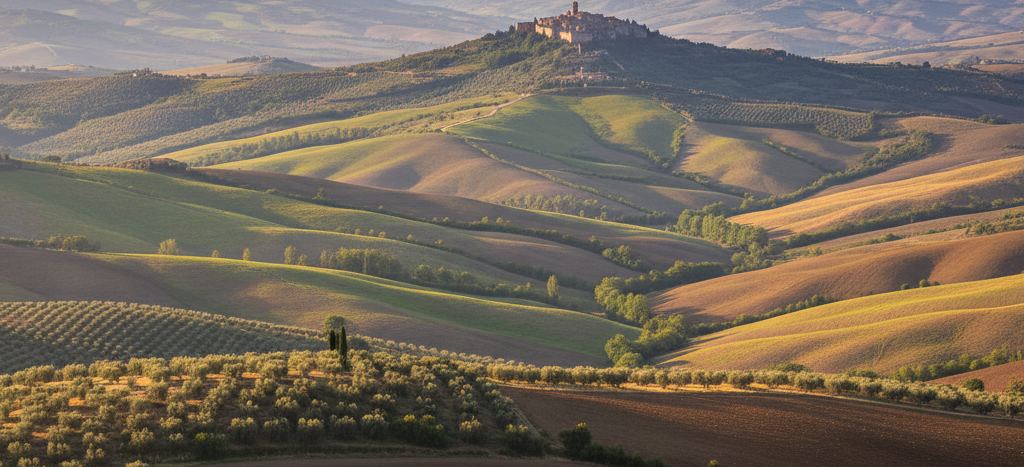
The house shape with the eight nights taken out
One base and twelve mornings from it, if you reserve a twelve night stay in the Umbrian hills
The part that breaks here is the eight nights. Twelve go in their place and nothing else moves: one base you unpack into once, a hire car, two hours from where you land, shoulder season, two people. Ask us to reserve a twelve night stay in the Umbrian hills and the figure is from $2,890, against $2,340 for the house shape.
| What it breaks | twelve nights instead of eight |
|---|---|
| Nights | 12 instead of 8 |
| Places you sleep | 1 |
| Car | a hire car, as the shape has it |
| From where you land | 2 hours |
| Season | shoulder |
| People the figure is built on | 2 |
| How far from the shape | one part changed |
| Two sharing pay | from $2,890 |
What breaks, and what four nights cost
Eight nights is the part that goes. Twelve replace it. Everything else is held exactly as the house shape sets it: one base you unpack into once, a hire car for the whole stay, a landing point about two hours away, shoulder season, two people. The figure moves from $2,340 to $2,890. That $550 buys four more nights of the same room, four more days on the car, and the extra work of holding a longer block in a house that normally lets by the week. Divided out, the two figures are about $293 a night and about $241 a night. That is arithmetic and nothing more. Twelve nights is not a superior holiday to eight and we will not describe it as one; it is four more nights, and whether they are worth having depends entirely on what you do with them. What the figure does not carry: your own flights, fuel, motorway tolls, food, and the two or three paid car parks you will use on most days.
Why the four extra nights go here
Umbria covers about 8,450 square kilometres and almost none of it is flat. The roads are the reason twelve nights behave differently from eight. A base near Todi or Montefalco sits within roughly ninety minutes of most of what people come for, but ninety minutes on an Umbrian provincial road is forty five kilometres, not a hundred and twenty. Perugia to Norcia through the Valnerina gorge is about a hundred kilometres and takes an hour and a half to an hour and three quarters. Orvieto to Gubbio is nearer two hours each way. On eight nights that geometry forces a choice: the north, meaning Gubbio, Citta di Castello and Lake Trasimeno, or the south, meaning Spoleto, the Valnerina and the Sibillini edge. Twelve nights removes the choice and leaves two days on which you drive nowhere at all. One thing to know about the south before you plan around it. Norcia is still being rebuilt after the 2016 earthquake. Parts of the centre are scaffolding and fenced ground, the main basilica is a construction site, and several villages up the Valnerina have churches that have been shut for years.
The ground, and what the shoulder season actually does
The valley floors sit at 200 to 300 metres, the towns at 400 to 600, and the Apennine wall behind Norcia runs well past 1,500. You can leave the house in shirtsleeves at nine and be cold at one. Late April to early June: daytime highs climb from about 19C to about 26C, nights still fall to 8C or 9C, and fog sits in the Tiber valley until nine or ten most mornings. September into late October: highs fall from about 26C to about 19C, and October is the wet month, somewhere near 80 to 100 millimetres spread across nine or ten days. It rarely rains all day. It rains hard for two hours, then stops, and the light afterwards is the reason people photograph this region in autumn rather than in July. The lentil fields on the plain above Castelluccio flower at some point between the last week of May and the first days of July, and that window moves by a fortnight from one year to the next. If the flowering is the point of the trip, say so when you ask. Nobody can sell you the week it happens.
The towns are vertical
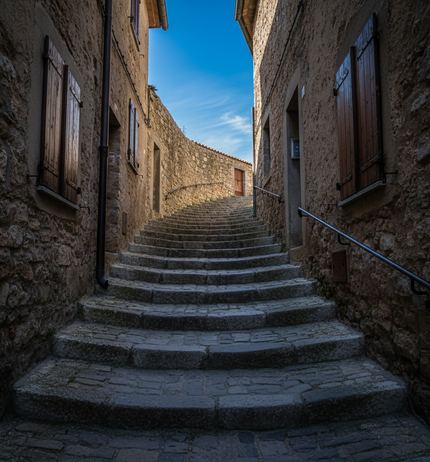
Every one of them was put on a hill for a reason and none has been flattened since. You park below the walls and you climb. In Assisi that is a long steady ramp; in Perugia it is a chain of escalators driven up through the foundations of a sixteenth century fortress; in Spello and Bevagna it is stone steps worn into shallow bowls, slick for an hour after rain. Three practical things. Parking bays are colour coded, and the code is consistent: blue lines are paid, white are free where any survive, yellow are for residents. Most historic centres are closed to general traffic and watched by camera, and a wrong turn past one of those cameras produces a fine that reaches you months later through the hire company, with an administration charge on top. And the towns shut in the middle of the day, roughly 13:00 until 15:30 or 16:00, churches included, with several museums closed on Mondays. So: the climb in the morning, a long lunch through the shutdown, the second town at five.
What a day here consists of
A working day looks like this. Awake at seven, bread and coffee at the house, on the road by nine because the car parks below the walls fill by ten. One town before lunch, two hours in it, most of that walking uphill. Sit down to eat by half past one, because kitchens stop taking orders around two. Back at the house by four, out of the heat. Something small in the evening thirty or forty minutes away, since dinner does not begin before half past seven and often not until eight. That is maybe six of the twelve days. Two or three are a market morning, an olive mill in the last week of October, a wine estate that takes visits before noon and not after. Two are deliberately empty: the terrace, a book, a drive to a shop for tomatoes and bread and nothing else. And one will be lost, to rain or to simply having had enough of hill towns for a while. Twelve nights leaves room for that day. That is the plainest thing this change does, and most of what the $550 is paying for.
Who this suits, and who it does not
It suits someone who unpacks once and means it, who is content to eat in the same three places and be recognised by the fourth evening, and who has fourteen days to give, because twelve nights plus two travel days is what this costs in time rather than money. It does not suit a ten day allowance. The shape does not compress; squeezing it gives you the eight night trip with a longer drive attached, which is not what you asked for. It does not suit anyone who wants coast, mountains and a major city inside one trip, because Umbria has no coast and the nearest large city is a two hour drive that undoes the point of having a base. It does not suit two people with different appetites for repetition, and that is a conversation worth having between yourselves before anyone sends a request in. And it does not suit a nervous driver. Most of the good roads here are single track for stretches, with a blind crest, a stone wall on one side and a drop on the other, and twelve nights means twelve days of them.
Awkward questions about this change
- Can we have the twelve nights at the eight night price?
- No. Four extra nights are four extra nights of a house and a car, and the people who own both charge for them. What we can do is show you where the $550 sits and what would move it: a smaller car, a base outside the walls instead of inside them, the last week of April instead of the middle of May. Those are different arrangements with different figures, not a reduction on this one.
- Do you arrange the flights?
- No. Cedar Passage neither flies nor sails anyone, and no carrier has ever signed anything with it. You book your own way in, in your own name, to Rome, Florence or Perugia, and then tell us the arrival time and terminal. We build the first day around it: whether the car is collected at the airport or in town, whether the drive is done that afternoon or the next morning, and whether the house can let you in before four.
- Twelve nights in one valley. Will we run out of things to do?
- Some people do, usually around day eight or nine, and it shows up as irritation with the driving rather than with the place. The answer is not more towns, it is fewer. Two blank days in the second week, one market morning, one visit that takes ninety minutes and asks no decisions of you. If you already know you dislike coming back to the same bed for a fortnight, this is the wrong shape, and we will tell you so when you ask rather than after you have paid a deposit to a house.
- Can we have an automatic car?
- Usually, but it has to be asked for at the start. Automatic transmission is a minority of the Italian hire fleet, it costs more per day, and in shoulder season the small ones go first. Size is the other constraint: the lanes inside the walls and the ramps down into private parking were laid out for something under four metres long, and a large automatic saloon will make three days unpleasant before you work out where not to take it.
- What do we pay you, and when?
- Nothing, at any point. Our fee comes from the supplier after the stay is over, out of its own margin, and it is not added to the numbers on this page. There is no deposit to this office, no card of yours in our files, and nothing here for you to cancel with us. What money there is moves in euros on the ground, between you and the people who hand over keys.
Others that move the shape about as far
There is no package on this site that somebody has not already asked for, and the thirty in the book are the requests that came back more than once.
-
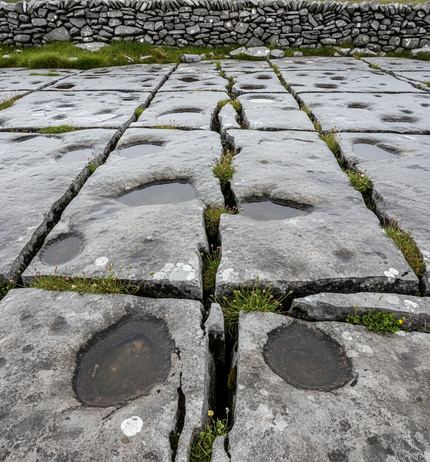
The Burren and south Connemara
Ireland · a driver instead of a hire car
from $3,140 two sharing one part changed -
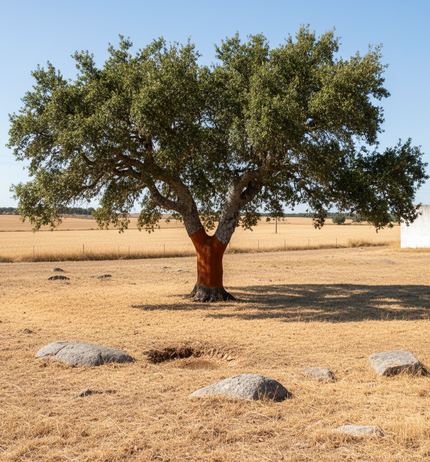
The Alentejo plain
Portugal · five nights instead of eight
from $1,690 two sharing one part changed -
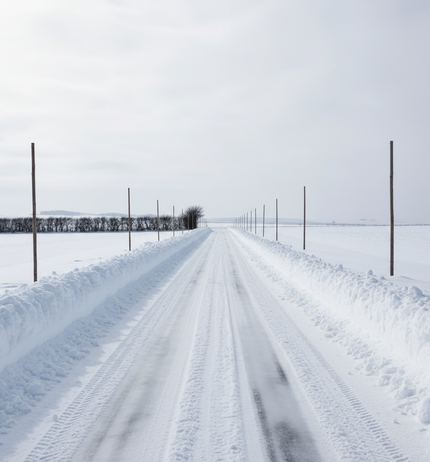
The Jura plateau
France · deep winter instead of shoulder season
from $2,410 two sharing one part changed -
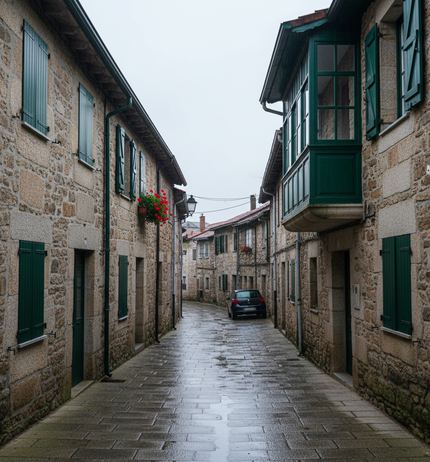
The Asturian coast road
Spain · four of you instead of two
from $2,180 two sharing one part changed -
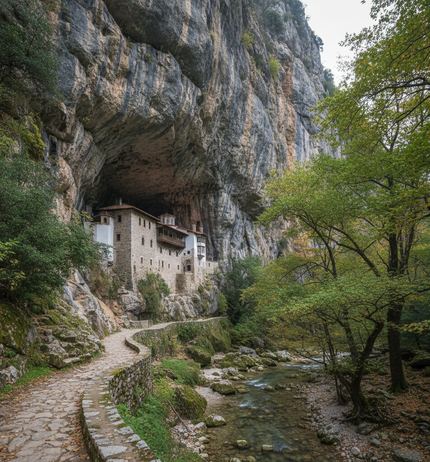
Inland Arcadia
Greece · four hours from the airport, not two
from $2,260 two sharing one part changed -
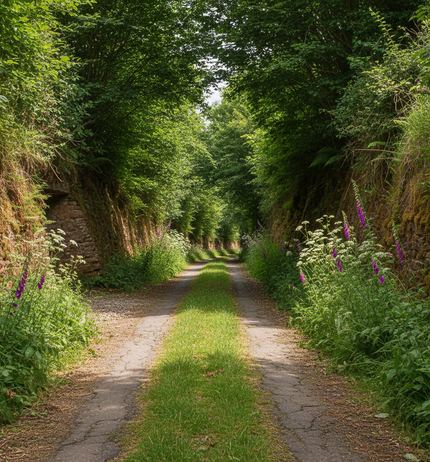
The Welsh Marches
Wales · high summer instead of shoulder season
from $2,520 two sharing one part changed -
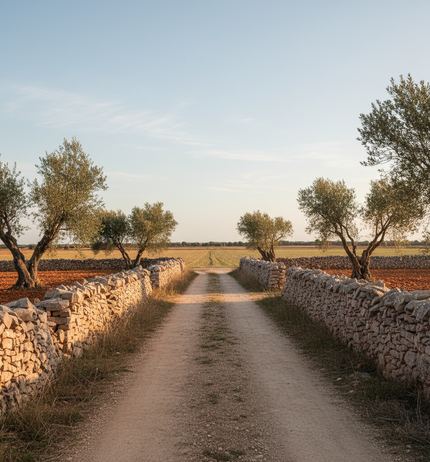
The heel of Puglia
Italy · one person instead of two
from $2,740 two sharing one part changed -
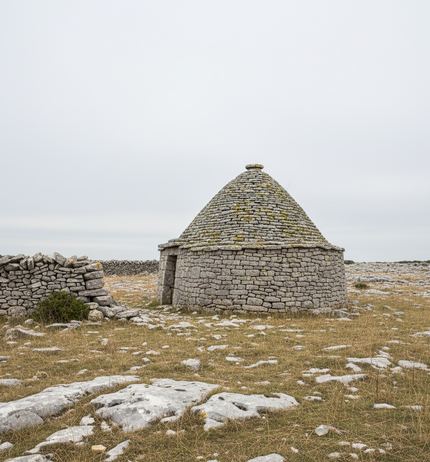
The Aveyron causses
France · sixteen nights instead of eight
from $3,880 two sharing one part changed -
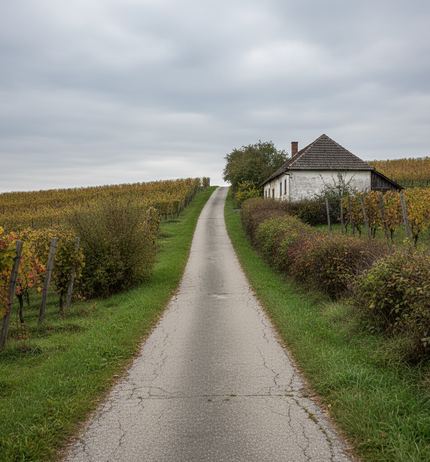
Eastern Slovenia and the Prekmurje
Slovenia · no car at all, trains and a bicycle
from $2,050 two sharing one part changed
Ask for this change in writing
Not a cent moves through here. The supplier bills you under its own name, and what this office earns reaches it from that supplier weeks later.