Home / Thirty changes / One part of the shape changed / The Asturian coast road
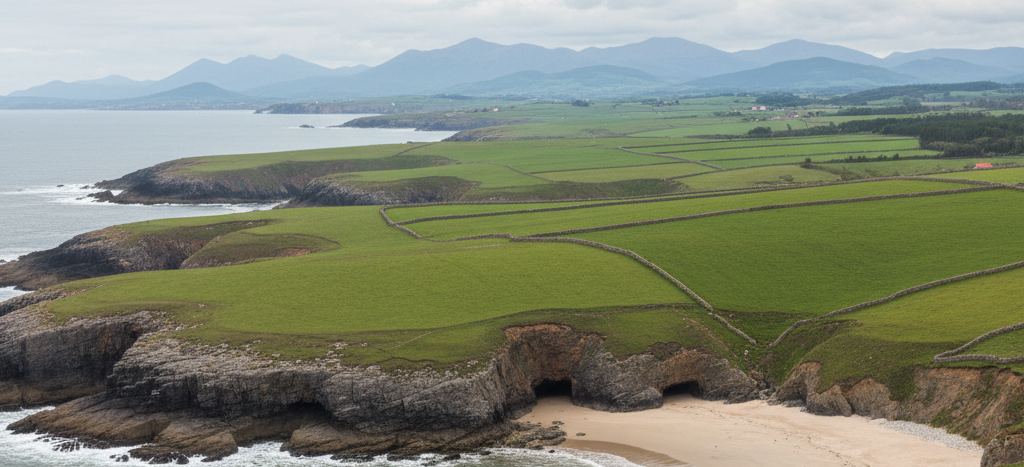
The house shape, with the party size changed
Four of you share one hire car and one bathroom when you book the Asturian coast road for four
The part that breaks here is the number of people. Two becomes four, so the second bedroom stops being optional and the boot of the hire car becomes the constraint. Everything else holds: eight nights, one base, two hours from where you land, shoulder season. To book the Asturian coast road for four costs from $2,180 a person.
| What it breaks | four of you instead of two |
|---|---|
| Nights | 8 instead of 8 |
| Places you sleep | 1 |
| Car | a hire car, as the shape has it |
| From where you land | 2 hours |
| Season | shoulder |
| People the figure is built on | 4 |
| How far from the shape | one part changed |
| Two sharing pay | from $2,180 |
The part that is gone
Two becomes four, and the second bedroom stops being a preference. In the eastern Asturian villages the two bedroom stone house is also the size Spanish families take for a week in May, so it is the size that goes first. The office asks suppliers about shoulder dates fourteen to twenty weeks out; later than that, the search moves inland or up the hill, away from the water. The second thing four people break is the boot. A compact five seat car swallows two large cases and a couple of soft bags. Four people packing for eight nights of coast and mountain, which means boots as well as shoes, need the class above, and an estate loads more easily than a hatchback of the same length. There is a cost on the other side: these village streets were laid out for carts, and the extra thirty centimetres is felt every evening. The third is the bathroom. Plenty of these houses have exactly one, and four adults sharing it before a nine o'clock start is a real condition of the week, not a footnote. Where a second bathroom exists the office says so in the quote and prices both versions, so the choice is made with the numbers in front of you rather than on arrival.
The base, and the drive to it
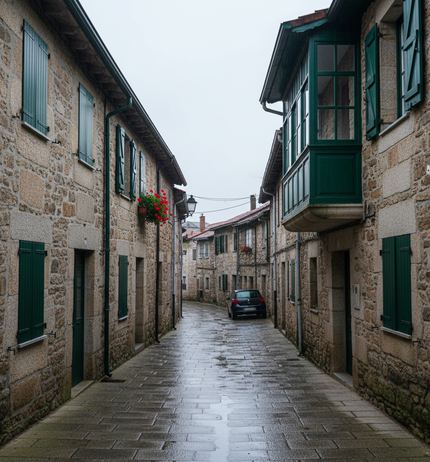
Most people land at the regional airport west of Aviles and drive east, about 140 km, an hour and three quarters on the A-8. The other common arrival is Bilbao, roughly 220 km west along the same motorway, closer to two and a quarter hours, with tolls on the Basque stretch and none once you cross into Asturias. Either way the two hours from where you land survives intact, and that is the whole point of it: one drive at the start, one at the end, and nothing in between that involves suitcases. The base sits between Ribadesella and Llanes, usually a kilometre or two back from the water in a village of forty or sixty houses. Stone, slate roof, often a glazed gallery on the south side to trap what sun there is. What matters with four is off street parking, a kitchen table that seats four properly rather than a breakfast bar with stools, and a drying rack, because something of yours is wet most days. Bread and milk are five minutes away, a supermarket worth the name about fifteen. You unpack once and the house is yours for all eight nights.
The coast days
The old road, the N-632, runs above the water and takes twice as long as the motorway shadowing it, which is the reason to use it. Between the two towns there are perhaps a dozen coves, most reached by eighty to a hundred and twenty steps down through pasture, none of them staffed outside July and August. One beach sits a hundred metres inland in a field, filled through a hole in the limestone, about fifty metres long and only there for a few hours either side of low tide. The walk in from the parking is ten minutes and there is nothing at all when you arrive, which is the appeal. Further east the cliff is hollowed by sea caves that spout on a big swell and a high tide, and do nothing whatever on a flat calm morning. The ground above them is undercut and the holes are not fenced. Read the swell forecast the night before, then go or do not go. At the edge of Ribadesella there is a painted cave that admits a fixed and small number of visitors a day, in guided groups, closed for part of the winter. Two adjacent places are easy enough to find. Four are not, so that reservation is made first and the rest of the week is built around the slot.
The mountain days
The limestone starts about thirty kilometres inland and goes up quickly. The road to the lakes above Covadonga climbs roughly twelve kilometres of hairpins to about 1,100 metres, and on dates set by the regional authority it is closed to private cars, at which point you leave the car in the town below and take the bus. Those dates cover Easter, most of the summer and scattered weekends. In a shoulder week you will usually drive it. Usually is the honest word, and the office does not dress it up as certainty. The long walk is the gorge: about twelve kilometres each way on a path cut into the cliff face at a steady height, so around twenty four kilometres and six to seven hours with lunch. No shade, no water on the route, a drop on one side and no railing along most of it. The parking at the bottom fills by nine in October and by eight in May. Between the two, the cheese village up the valley runs cave visits through the day and a market on Sunday, and there is a cider house in almost every settlement, where a bottle costs three or four euros and is poured a mouthful at a time from arm's length. Nobody drives afterwards, so decide in advance who is not drinking.
The arithmetic of four
From $2,180 a person: eight nights, four people sharing a two bedroom house in shoulder season, a mid size hire car for the full eight days, and the office arranging both. The house and the car are fixed costs. They cost what they cost whether two people use them or four, and dividing them four ways rather than two is the entire reason the figure sits where it does. That is arithmetic, not an argument. The office does not rank party sizes and will not tell you that four is the way to do this. Not in the figure: your own flights, which are yours to arrange and yours to hold; fuel, around seventy to a hundred and ten euros over the week depending how far west you go; tolls if you come in through the Basque country; food; entry tickets for the cave and the cheese caves; and the hold the car company places on a card at its own desk, which is a matter between you and them. Cedar Passage takes no money from you and keeps no card numbers. Whoever hands over the keys is the one who bills you. The office is paid afterwards, by the supplier, out of that supplier's own margin.
Who this change suits, and who it does not
It suits two couples who have travelled together before and can agree, at breakfast, on a departure time. It suits two adults with two older teenagers or grown children, because the walks are long and the coves are reached by steps. It suits people who like driving on roads where forty kilometres takes an hour, and who would rather come back to the same kitchen every night than pack again on Wednesday. It does not suit four people who want separate days. There is one car and it goes to one place at a time. If separate days are the requirement, this is not the shape for it, and two cars is a different quote with a parking problem attached. It does not suit small children. The cliff paths are unfenced, the coves have steps, the cave has stairs and no pushchair access, and the gorge is not a family walk however fit the family. It does not suit anyone who needs the weather to behave. And if what you actually want is four bedrooms and four bathrooms, say so in the first conversation. That exists. It is simply not this.
Awkward questions about this change
- Can you book our flights to Spain?
- No. Cedar Passage does not fly people or float them, and has no arrangement with anybody who does, so there is nothing here for the office to sell you. Your own flights are yours to book and yours to hold. We would rather you booked them after the house and the car are confirmed than before, because the dates that exist for a two bedroom house in shoulder season are narrower than the dates that exist for a seat. Send the arrival time once you have it and the car pickup is set to match.
- Can we take two cars instead of one?
- You can, and it changes more than the cost. These villages were built before cars, and off street parking usually means one space, sometimes two where the house has a yard. A second car adds roughly three to four hundred dollars over eight days plus its own fuel, and it removes the thing that makes four people work here, which is that everybody is in the same vehicle and the day gets decided once. If two of you want the museum and two want the walk, one car and a drop off normally settles it.
- Do we all need to be able to drive a manual?
- At least one of you should, unless you ask early. Automatics are a small part of the Spanish rental fleet outside the premium classes, they cost noticeably more, and in shoulder season the supply of one in an estate size is thin. If nobody in the party drives a manual, say so in the first conversation rather than the last. On the hairpins up to the lakes, second gear and engine braking matter far more than power, and a driver wrestling with the gearbox will not enjoy the descent.
- Will the road to the lakes be open in our week, and will the sea caves be spouting?
- The road is opened and closed by the regional authority on published dates, and the office reads the same notice you can. In a shoulder week it is usually open to private cars; when it is not, the bus runs from the town below and the day still happens, it simply starts earlier. The sea caves are a different matter. They need a real swell and a high tide at the same time, and there are weeks in October when they do nothing at all. Nobody can promise you either, and the office will not.
- It rains up there. What do four people do in a stone house all day?
- There will be wet days. Four out of eight in May would not be strange, and the drizzle here soaks you slowly rather than all at once. This is exactly why the quote specifies a house with a proper table and a sitting room rather than a studio with a sofa, and why the base sits fifteen minutes from a town rather than forty. A wet day is usually a cider house at two, the covered market, the small pre-Romanesque church on the hill outside Oviedo that takes twenty minutes to see, and a drying rack earning its keep.
Others that move the shape about as far
There is no package on this site that somebody has not already asked for, and the thirty in the book are the requests that came back more than once.
-
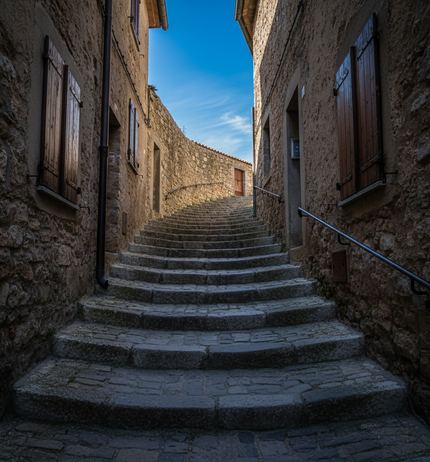
The Umbrian hill country
Italy · twelve nights instead of eight
from $2,890 two sharing one part changed -
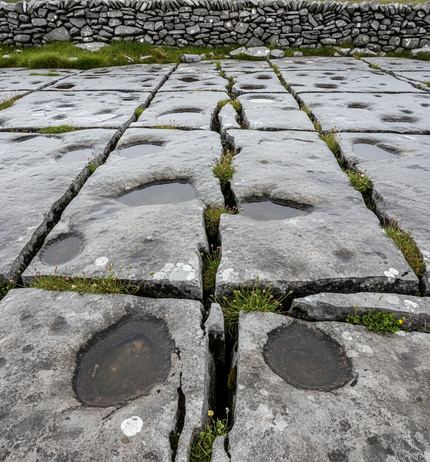
The Burren and south Connemara
Ireland · a driver instead of a hire car
from $3,140 two sharing one part changed -
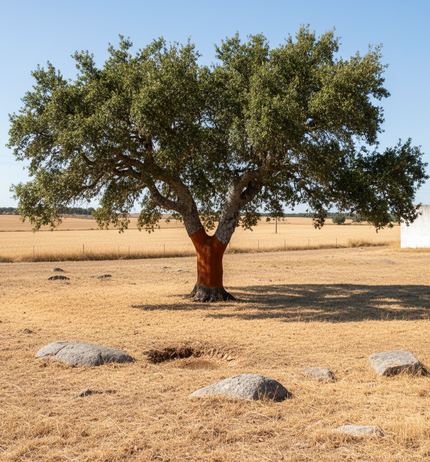
The Alentejo plain
Portugal · five nights instead of eight
from $1,690 two sharing one part changed -
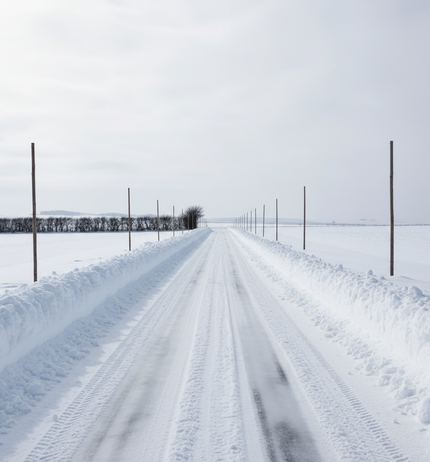
The Jura plateau
France · deep winter instead of shoulder season
from $2,410 two sharing one part changed -
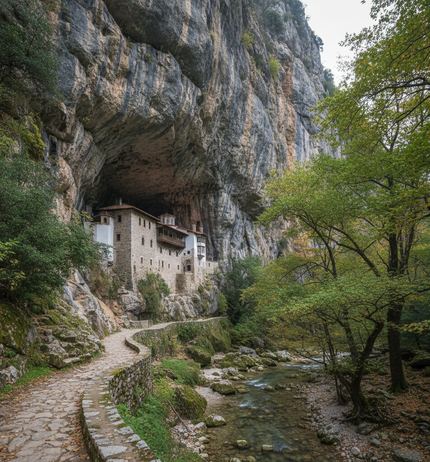
Inland Arcadia
Greece · four hours from the airport, not two
from $2,260 two sharing one part changed -
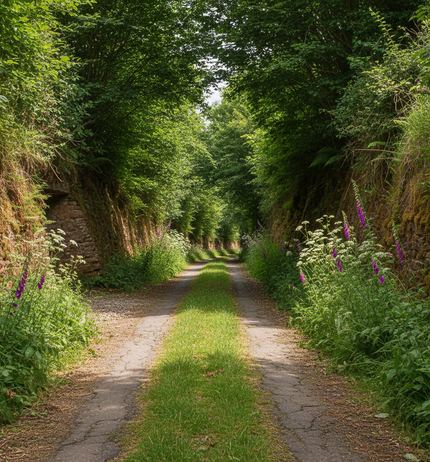
The Welsh Marches
Wales · high summer instead of shoulder season
from $2,520 two sharing one part changed -
The heel of Puglia
Italy · one person instead of two
from $2,740 two sharing one part changed -
The Aveyron causses
France · sixteen nights instead of eight
from $3,880 two sharing one part changed -
Eastern Slovenia and the Prekmurje
Slovenia · no car at all, trains and a bicycle
from $2,050 two sharing one part changed
Ask for this change in writing
Not a cent moves through here. The supplier bills you under its own name, and what this office earns reaches it from that supplier weeks later.