Home / Thirty changes / Almost nothing of the shape left / Lofoten in the dark months
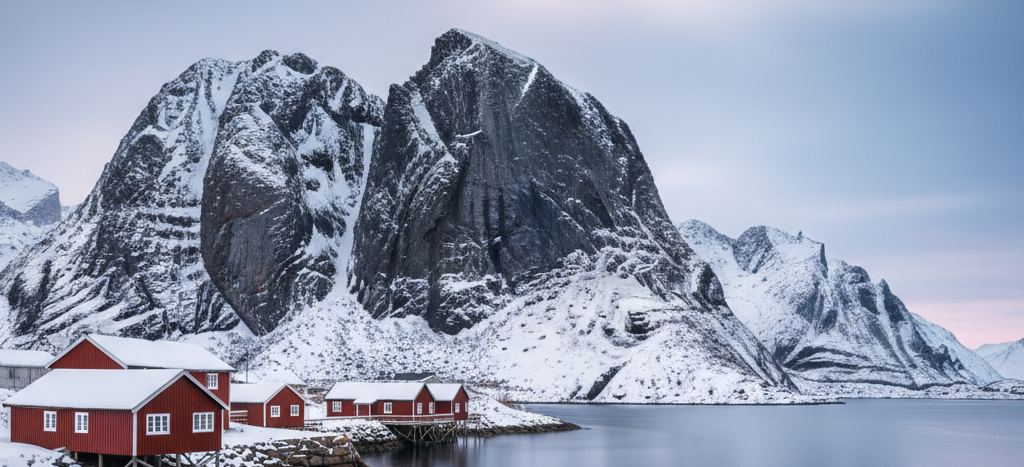
Norway, sixty-eight degrees north
Seven nights and four beds, none of them in daylight, are what you reserve a winter trip to Lofoten for
Seven nights, four beds and no car keys: the house shape with three named parts taken out and something else put in each place. To reserve a winter trip to Lofoten is to buy short light, transfers on somebody else's timetable and a fishing coast in its working season. From $3,960 for two.
| What it breaks | four bases, seven nights, no daylight to speak of |
|---|---|
| Nights | 7 instead of 8 |
| Places you sleep | 4 |
| Car | no hire car |
| From where you land | 5 hours |
| Season | winter |
| People the figure is built on | 2 |
| How far from the shape | almost nothing of the shape left |
| Two sharing pay | from $3,960 |
What breaks, and what stands in for it
Three named parts of the house shape are gone here. The single base you unpack into once becomes four, at two nights, two nights, two nights and one. The hire car goes, and with it the freedom to leave at your own hour; you travel on the one road through the islands, the E10, on scheduled buses whose winter timetable thins out at weekends. And the eighth night goes with the car, because the eighth night was always the day you needed to hand it back. What arrives in exchange is the season. This runs between the second week of January and the first week of March, which in Lofoten is the working half of the year rather than the quiet one. The Arctic cod come into Vestfjorden to spawn, the boats go out before light, and the villages you sleep in are doing the thing they were built for instead of waiting for summer. From the mainland airport at Evenes to the first bed at the western end is about 300 km of the E10, and in February that is close to five hours once the stops are counted. From $3,960 for two, against $2,340 for the house shape. The difference sits in four separate reservations rather than one, winter rates on a small stock of cabins, and every road transfer priced on its own.
Where the light actually goes
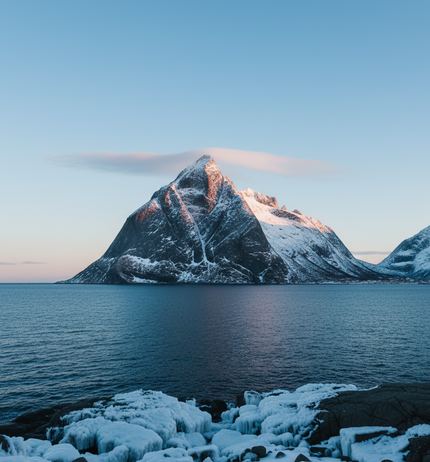
The sun does not clear the horizon at Svolvaer between about 5 December and 7 January. This trip begins after that, and the numbers then move quickly: on 15 January the sun is up for roughly two hours, by the last day of the month for about five, by the middle of February for seven and a half. Those figures are close to beside the point, for two reasons. The peaks do most of the blocking. At Reine and Hamnoy the walls go up 400 to 700 metres within a kilometre of the water, so direct sun reaches a quay at sea level weeks after the almanac says it has come back. And twilight at this latitude is long and slow. In mid January you can read a paper map outdoors from about half past nine until half past two, in a light that starts grey, holds a flat blue for hours, and lays a dull rose on the snowfields for perhaps forty minutes around noon. So the day is not short so much as differently shaped. You get up in the dark, you use the middle of it hard, and you are back under a lamp by four in the afternoon. Anyone who needs daylight to feel level should read that sentence twice before sending a request.
Four bases, running west to east
The order is deliberate. The first bed is at the western end, near Reine and Hamnoy in Moskenes, which is the long haul from the airport; you do it while you are fresh and you never do it again. From there the trip works back east: two nights on Vestvagoy, near Ballstad or Stamsund; two in Henningsvaer, out on its bridges over the water; the last night in Svolvaer, three hours from the airport rather than five. That last detail matters more than it sounds. A road shut by wind on the final morning costs you a plane if the run is five hours and usually does not if it is three. The distances are short and slow. Reine to Leknes is about 60 km, Leknes to Henningsvaer about 45 km, Henningsvaer to Svolvaer about 25 km, all of it single carriageway with tunnels, bridges and a plough somewhere ahead of you. Buses run a handful of times a day, fewer at weekends, and Henningsvaer sits 8 km down a spur with a thinner service than the E10 itself. The practical consequence is a hard rule about luggage: one bag each, of a size you can carry up an icy step, and no fixed plan for the hour after you get off a bus.
Ice underfoot, wind over the top
The cold is not the difficulty. The mean January temperature at sea level in Svolvaer sits within a degree or two of freezing, which sounds mild and creates the actual problem: it thaws in the afternoon and sets hard overnight, so quays, steps and village lanes glaze over. Spikes that pull on over your boots are not an optional refinement here, and neither is a hood, since an umbrella is useless in this wind. It is also wet. Lofoten takes well over 100 mm of precipitation in a typical winter month and a good share of it arrives sideways. Gales close exposed sections of the E10 and shut the longer bridges to high sided vehicles, and a coach is a high sided vehicle. Reckon on one day in seven when the plan is cancelled by weather, and decide in advance what you will do with it. The honest answer is usually a harbour window, a pot of coffee and a long afternoon indoors. The marked walking routes are a summer proposition. In February the same ground is avalanche and ice terrain, and the single walk included is a short winter route with a local mountain guide, who will turn it round on the spot if the snowpack says so.
What the days consist of
From late January the Arctic cod are in Vestfjorden and the fishery runs at full tilt. Boats leave before first light and land in the early afternoon, and standing on a quay at one o'clock while a catch comes ashore is a real spectacle of work, cold hands and hydraulics. Through February and March the racks fill with split fish hung to dry in the wind, and the smell tells you which village you are in before the road sign does. The rest is looking, mostly. The white sand beaches at Haukland, Uttakleiv and Ramberg hold snow down to the tideline with turquoise water in front of it, and a ploughed road gets you to all three. Henningsvaer is a working harbour with a gallery or two, the western villages have a boatyard and a landing station, and most municipalities keep a small museum of the fishery. Shops shut early. The last useful bus out of Henningsvaer can be mid afternoon. Dinner is often wherever you are sleeping, because three places in the village are open in February and one of them closes on Tuesday. None of that is a hardship, but it does mean the day has a shape you did not choose.
The price, and what this office does with it
From $3,960 for two covers seven nights in cabins and small guest houses across the four villages, the road transfers between them and from the airport, and one guided winter walk. It does not cover your own flights, food, drink, or the things you will buy at a counter because you are cold. Prices in Norway tend to surprise people at the till rather than in the reservation, so budget for that separately. Not a cent reaches this office and no card detail is kept here. Each place you sleep invoices you itself, in kroner, under its own terms, and our fee reaches us afterwards from the supplier side. It does not move with the room you pick, which is why we can describe the small dark cabin and the larger one at the end of the quay in the same flat terms and let you choose on the facts. If you want a quote, three things make it useful: the fortnight you could travel, whether you can carry your own bag up a step, and whether you are steady on ice. The rest we can work out on the phone in ten minutes.
Awkward questions about this change
- Will we see the northern lights?
- Possibly, and none of this is sold on it. Lofoten sits under the auroral oval, so the activity is often present; the sky above it often is not. Cloud on this coast is persistent in winter, and a run of six overcast nights in a week is unremarkable. No part of the price is attached to the aurora appearing, nothing is returned if it stays away, and any night you spend standing outside waiting is a night you chose. Plan the trip for the coast, the fishery and the light, and treat the rest as weather doing something interesting.
- Can you hold our flights, or put them on the same reservation?
- No. This office puts nothing in the air and nothing on the water, and signs with no carrier at all, so it cannot sell you a seat, hold one, change one, or speak to anyone about the one you already have. Your flights are yours from start to finish. What it will do is tell you which arrival hour makes the road transfer work in the dark, which one leaves you sitting at Evenes for four hours, and how much slack to leave at the far end given that the road can shut. That is advice, not a reservation.
- Could we stay in one base and travel out from it instead?
- Yes, and then it becomes a different thing on a different page. One base at Svolvaer or on Vestvagoy removes three moves and three sets of luggage stairs. It also puts a two hour bus ride at each end of any day spent at the western end, inside a window where usable light lasts four or five hours. Neither version is the correct one. The question is only whether you would rather give up mornings to packing or to sitting on the E10, and you already know which of those you tolerate.
- Four moves in seven nights with no car. How bad is that, honestly?
- It is the hardest part of the trip and it does not suit everyone. Three times you will pack in the dark, wait at a roadside stop with no shelter, and carry a bag up steps that were wet yesterday and are ice this morning. If you travel with a large case, if stairs are a problem, or if you want the same room all week, this is the wrong shape for you, and the house shape exists for exactly that reason. If one bag and a timetable suit you, the moves buy four coastlines instead of one.
- What happens if the road closes or a bus is cancelled?
- You stay where you are and the next night gets moved. It happens most winters, usually for a few hours rather than a whole day, and the villages are entirely used to it. Because nothing is paid through this office, the repair is one phone call to the place expecting you and a second to the place you are leaving; most will hold a room through a February gale without argument. Leave one spare day before your flight home and the question stops being frightening. Do not take the last bus of the day to the airport.
Others that move the shape about as far
There is no package on this site that somebody has not already asked for, and the thirty in the book are the requests that came back more than once.
-
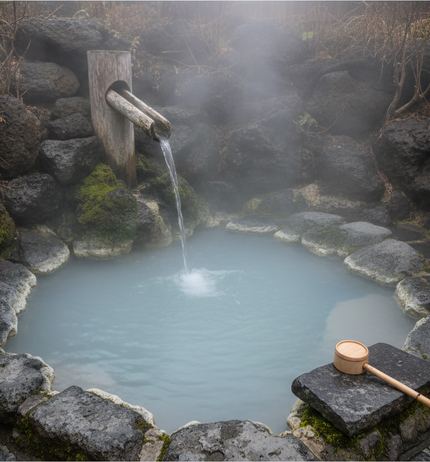
Kyushu, the hot spring line
Japan · six bases, sixteen nights, trains, no car, no fixed bed
from $5,240 two sharing almost nothing of the shape left -
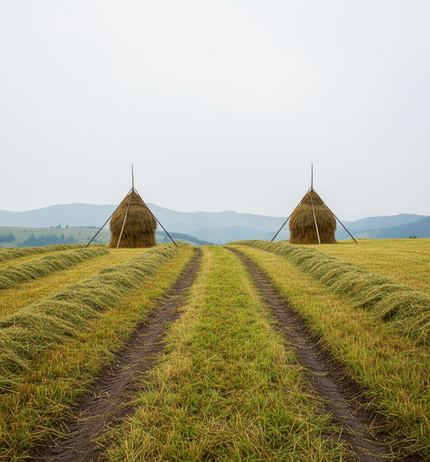
Across the Carpathians on foot
Romania · nine bases, walking, luggage moved for you
from $3,180 two sharing almost nothing of the shape left -
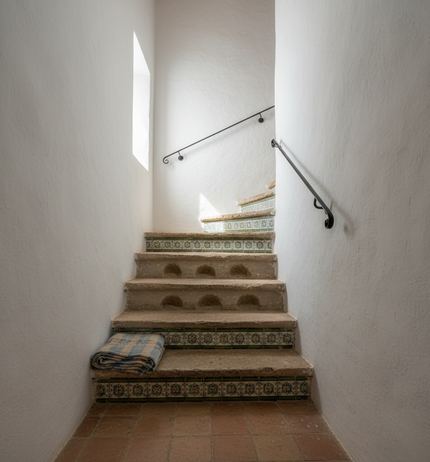
The white towns, one town at a time
Spain · seven bases, fourteen nights, buses
from $2,960 two sharing almost nothing of the shape left -
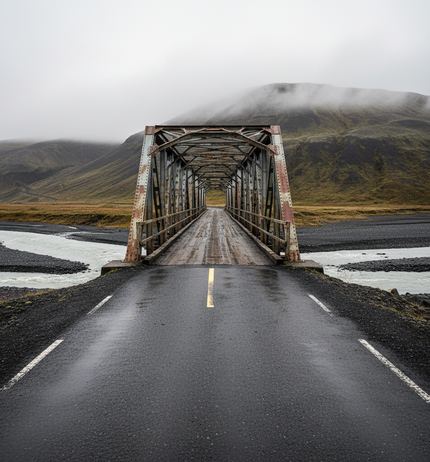
The ring road out of season
Iceland · eight bases, nine nights, driving every day
from $4,180 two sharing almost nothing of the shape left -
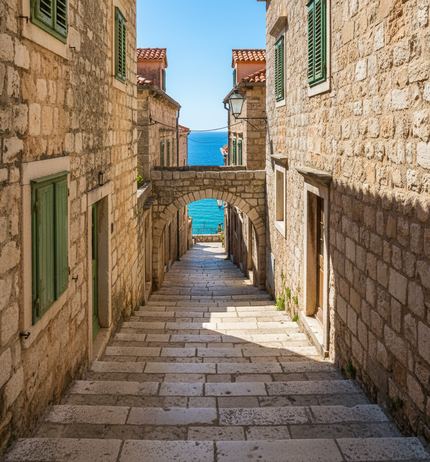
Down the Dalmatian islands
Croatia · six bases, twelve nights, ferries you buy yourself
from $3,080 two sharing almost nothing of the shape left -
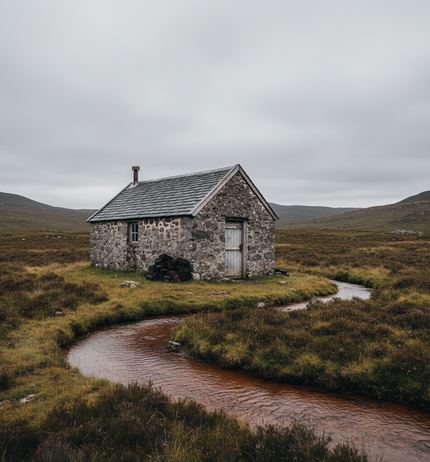
The northwest of Scotland, bothy to bothy
Scotland · eleven bases, twelve nights, carrying your own bed
from $2,870 two sharing almost nothing of the shape left
Ask for this change in writing
Not a cent moves through here. The supplier bills you under its own name, and what this office earns reaches it from that supplier weeks later.