Home / Thirty changes / Almost nothing of the shape left / Across the Carpathians on foot
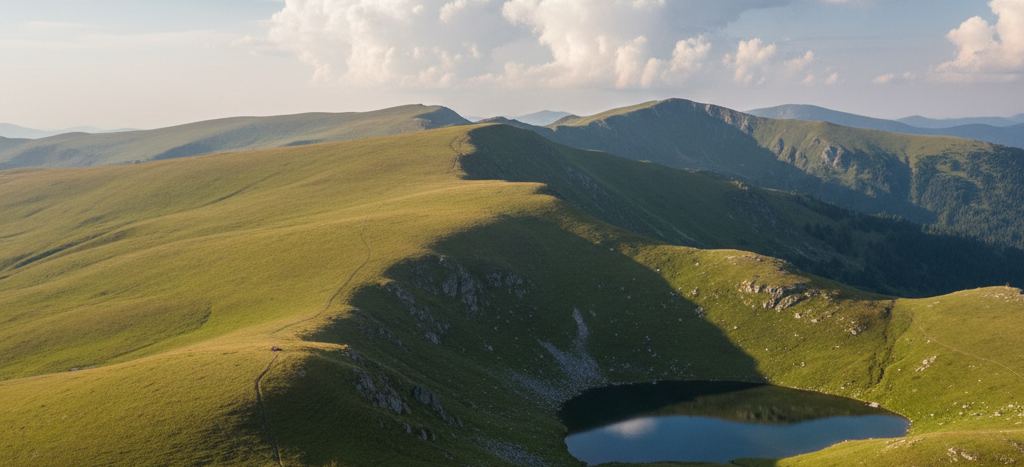
The house shape with almost nothing of it left
Nine beds in ten nights: reserve a village to village walking trip in the Romanian Carpathians
The single base is the first part to go. Nine stand in for it, one of them keeping you two nights, and the hire car goes as well; you walk from bed to bed while a driver takes the luggage round by road. What that does to the days, the legs and the figure, before you reserve a village to village walking trip in the Romanian Carpathians.
| What it breaks | nine bases, walking, luggage moved for you |
|---|---|
| Nights | 10 instead of 8 |
| Places you sleep | 9 |
| Car | no hire car |
| From where you land | 5 hours |
| Season | summer |
| People the figure is built on | 2 |
| How far from the shape | almost nothing of the shape left |
| Two sharing pay | from $3,180 |
Nine beds where the shape keeps one
One base is the part that breaks here, and it breaks into nine. You sleep somewhere different almost every night, arrive at each bed on foot with the day already behind you, and unpack nothing but a wash bag. The hire car goes with the base: no vehicle stands in your name for ten nights, and the only engine in the week belongs to the driver who moves the luggage along the valley roads. Two hours from the airport becomes five, because the walking begins on the far side of the mountains from the arrivals hall. Shoulder season becomes summer, since the high pasture keeps snow patches into the middle of June and the village kitchens close once the flocks come down. Ten nights, two people, from $3,180. Inside that figure sit the nine beds, ten breakfasts, seven dinners, the luggage transfer, the road transfer at each end, and route notes with tracks for a phone. Outside it sits getting to Romania and home again, which stays yours: this office neither flies nor sails anyone, and no carrier has ever signed anything with it.
Where the crossing actually goes
The line runs south and west across the Cindrel and the Sureanu, two of the emptier ranges of the Southern Carpathians, and it starts in the shepherding villages above Sibiu. The first nights are at around 900 metres in Rasinari, then Poiana Sibiului and Jina, settlements of a few thousand people where wool and cheese still pay for the houses. From there the route climbs to the crest. Varful Cindrel stands at 2,244 metres, and the ridge either side of it is bare grass and old glacial hollows, two of which hold lakes you can walk round in twenty minutes. You drop to the Sebes valley at the Oasa reservoir, roughly 1,250 metres, where one base keeps you two nights and the middle day is a loop with a light pack. The second half crosses the Sureanu, high point Varful lui Patru at about 2,130 metres, then falls east into the Gradistea valley to finish at the Dacian sanctuary terraces at around 1,200 metres, the seat of a kingdom that took Rome two wars to finish, before the walk out to Costesti in the valley. Roughly 140 kilometres on foot and about 6,500 metres of climbing, spread across nine walking days.
Hay, mud and what is underfoot
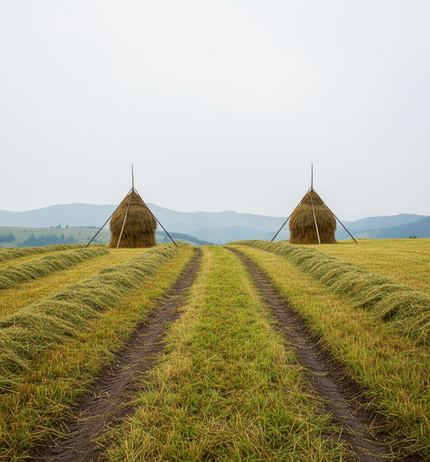
Half the surface is grass that somebody mows. Meadows below about 1,400 metres are still cut by hand in July, and the hay is stacked around a wooden pole into shapes the height of a person, so an hour of walking can pass fifty of them standing in rows down a slope. Underneath, the path is a braid of sheep tracks a boot wide, three or four of them running parallel with nothing to say which one keeps its line. Higher up the grass gives way to rock and to mats of low mountain pine that you go round rather than through. Lower down the tracks are shared with vehicles that haul cut wood, and for two or three days after a storm those ruts hold water and churned clay; there is a stretch below Oasa where nobody arrives with clean boots. Waymarks are painted stripes and crosses on rock and trunks, freshly done in places and thirty years faded in others, and twice on the crossing they vanish for a kilometre of open pasture where you hold a bearing and pick them up at the next saddle. Stiff soles and ankle support rather than trail shoes, and gaiters earn their weight in the first half of July.
Six thirty to five, and the storm clock
Breakfast is at seven and it is eggs, cheese, bread, tomatoes and something that was preserved last autumn. You are walking by eight because the weather keeps a timetable: through July and August the heat lifts moisture off the woods all morning, and by one or two in the afternoon a build over the crest can turn into hail and lightning inside half an hour. The route is laid out so the high sections are done before that, which on two days means leaving at half past six. Lunch is whatever you bought in the village shop the evening before, eaten sitting on grass, because nothing at all is sold between the villages and the sheepfolds you pass are working places rather than stops. Water comes from springs, most of them steady, a few of them dry by mid August, and you carry two litres. The afternoon is the descent, and you reach the next village between four and six with the luggage already in the hall. Dinner is at seven, cooked by whoever owns the house, one dish for everybody at the table and no second option. Most people are asleep by ten because their legs insist on it.
Luggage by road, and the night the road is not there
One bag each, fifteen kilos, and a driver who spends his day going the long way round. Fifteen kilometres over a ridge is commonly seventy kilometres of valley road for the van and two and a half hours of it, and on two days he has to cross the range at another pass entirely to reach the village you are walking into. He collects at eight and the bags are in the next hallway by mid afternoon. What you carry is a twenty five litre pack: water, waterproofs, a warm layer, lunch, a small first aid kit and a phone with the tracks on it. Then there is night seven. The bed that night is a mountain cabana at about 1,700 metres with no road to it whatsoever, and nothing can be done about that by anybody. You take a sleeping bag liner, a change of clothes and a wash kit up there yourself, four kilos or so, and the bags meet you again the following afternoon. That night is the one part of the ten that cannot be arranged away, which is why it is printed here rather than left for you to find in a document.
Who walks this well, and who should not
It suits people who have already done a hut to hut week somewhere in Europe and want a range where they will meet nobody for hours; who can be on their feet five to eight hours on nine consecutive days with no rest day built in; and who are content to be fed one dinner rather than to choose one. Descents are what hurt. There are two of over a thousand metres, so a knee that objects on long downhills will object here. It does not suit anyone who wants a pool at four in the afternoon, anyone with a child under about twelve, or anyone who would rather not think about dogs. The sheepfolds keep four to six large ones each, they come out at a distance, they are doing the job they were bred for, and the practical answer is to stop walking, keep the poles low and wait for the shepherd to call them off. Brown bears live in these woods in numbers usually put near eight thousand for the country as a whole, though the encounters that matter cluster around village rubbish at dusk rather than open ridges at noon. If any of that reads as a reason to stay at home, the office would rather you worked it out now than in a kitchen in Jina.
Awkward questions about this change
- Do the bags reach us every single night?
- No. On night seven they cannot, because that bed is a mountain cabana with no road to it, and no arrangement changes the geography. You carry what you need for one night, about four kilos on top of the day pack, and the van has the bags waiting again in the next village the following afternoon. Every other night the luggage is in the hall before you are. Anyone who wants ten nights of luggage transfer without exception is looking at a different route, and the office will say so instead of hoping you do not notice.
- Is somebody walking with us, or are we on our own out there?
- Two of the nine days have a local walker with you, the pair that cross the open crest where the marks give out. The other seven you do alone, with printed notes, a paper map and tracks on your phone. If you would rather have somebody every day it can be arranged through the same operator and adds roughly $760 for the two of you, which is a real change to the shape and the office will quote it as one rather than folding it in quietly.
- One of us may not manage the fifth day. What happens then?
- The van takes that person, or both of you, to the next village by road, and the day ends where it was always going to end. Nothing is refunded, because the bed, the dinner and the driver are all still there. It can be decided at breakfast; the driver is already going that way. Two people out of a typical ten do this at least once, usually on the day after the longest descent, and it is planned for rather than treated as a failure.
- Who takes the money, and at what point?
- Not this office, at any point. The Romanian company that puts the ten nights together invoices you in its own name, sets its own deposit and holds whatever card details it needs; nothing is typed into a form here and no card number ever reaches this desk. What the office earns comes from that company, and it arrives long after you have walked out to Costesti. That is also why every figure on this page is a starting one until the operator confirms it to you in writing.
- Could we walk it in early June, or leave it until late September?
- Early June is possible and it is a different week: snow lies in the north facing hollows above 1,900 metres, the streams are full, and the hay has not been cut, so the meadows look nothing like the photographs. Late September fails on beds rather than weather. Two of the nine houses close when the flocks come down off the mountain, and the office will not sell you a night in a house that will be shut. Mid June to mid September is what can actually be put together.
Others that move the shape about as far
There is no package on this site that somebody has not already asked for, and the thirty in the book are the requests that came back more than once.
-
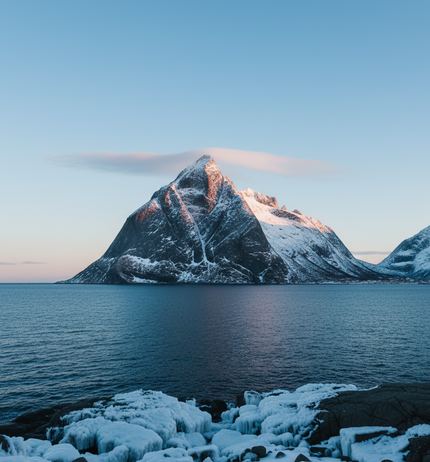
Lofoten in the dark months
Norway · four bases, seven nights, no daylight to speak of
from $3,960 two sharing almost nothing of the shape left -
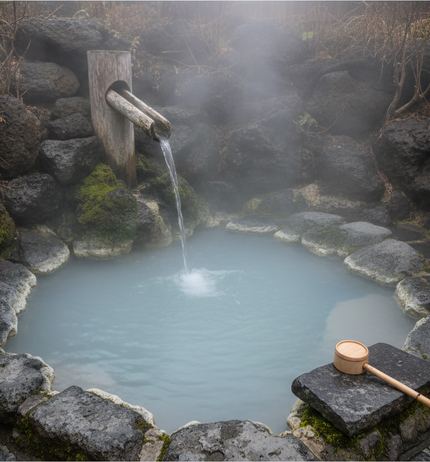
Kyushu, the hot spring line
Japan · six bases, sixteen nights, trains, no car, no fixed bed
from $5,240 two sharing almost nothing of the shape left -
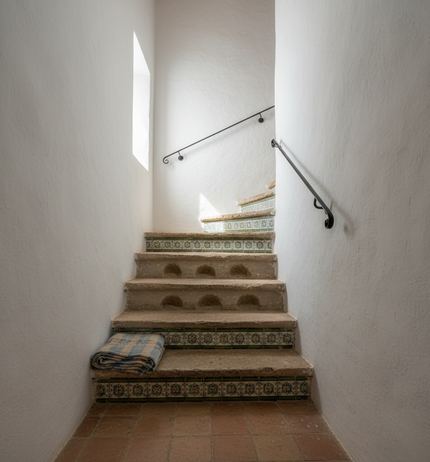
The white towns, one town at a time
Spain · seven bases, fourteen nights, buses
from $2,960 two sharing almost nothing of the shape left -
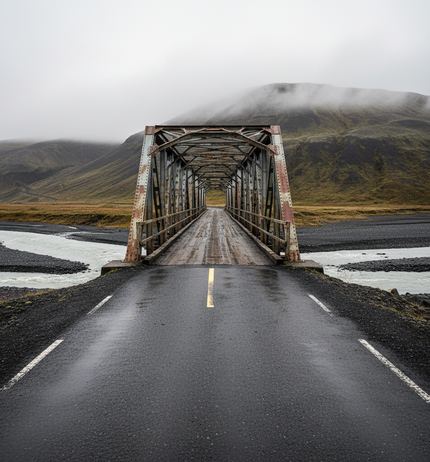
The ring road out of season
Iceland · eight bases, nine nights, driving every day
from $4,180 two sharing almost nothing of the shape left -
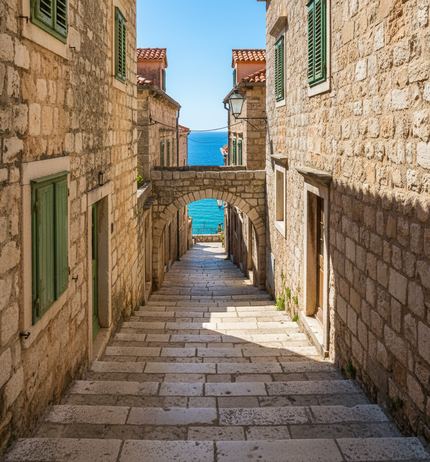
Down the Dalmatian islands
Croatia · six bases, twelve nights, ferries you buy yourself
from $3,080 two sharing almost nothing of the shape left -
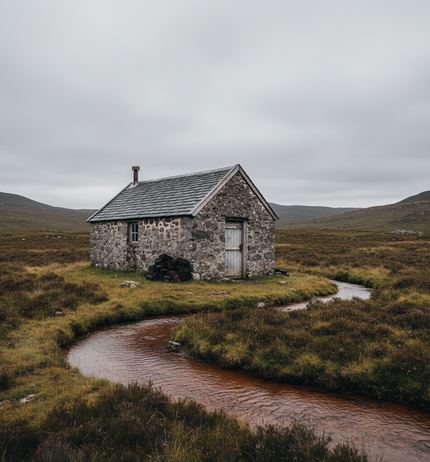
The northwest of Scotland, bothy to bothy
Scotland · eleven bases, twelve nights, carrying your own bed
from $2,870 two sharing almost nothing of the shape left
Ask for this change in writing
Not a cent moves through here. The supplier bills you under its own name, and what this office earns reaches it from that supplier weeks later.