Home / Thirty changes / Two or three parts changed / The Mani and the Taygetos wall
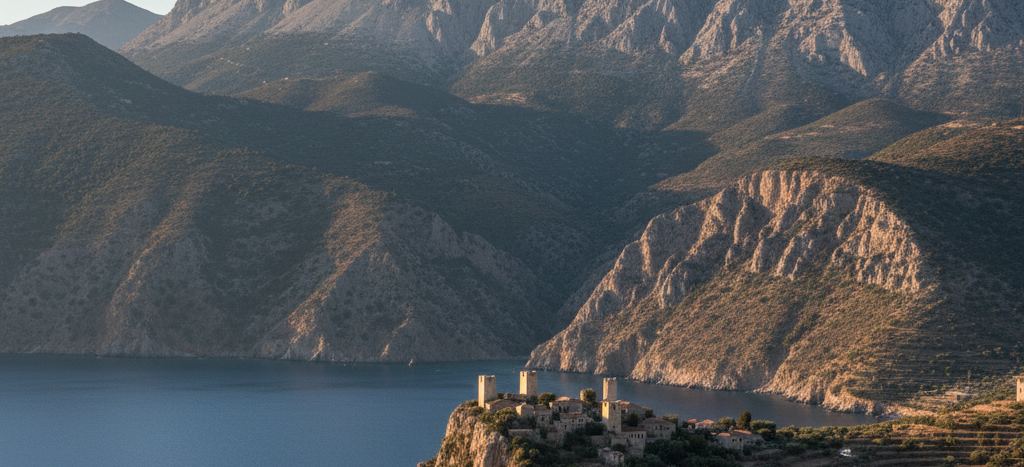
Greece, the southern Peloponnese
Nine nights, two bases and no hire car: reserve a two base walking trip in the Mani
Two parts of the house shape are gone. The one base becomes two rooms, five nights and then four; the hire car becomes a van, a driver and six days of walking between them. To reserve a two base walking trip in the Mani is to accept both changes at once: you carry a day pack, you sleep in two beds over nine nights, and you never once look for a parking space. From $2,980 a person.
| What it breaks | two bases and a walking week between them |
|---|---|
| Nights | 9 instead of 8 |
| Places you sleep | 2 |
| Car | no hire car |
| From where you land | 3 hours |
| Season | shoulder |
| People the figure is built on | 2 |
| How far from the shape | two or three parts changed |
| Two sharing pay | from $2,980 |
What is broken, and what replaces it
Two named parts of the house shape are gone here, and they go together. The single base becomes two: five nights in a village above the west coast, then four nights in a stone town near the southern tip. The hire car does not appear at all. In its place there is a van and a driver, who moves the bags from the first room to the second on the sixth morning, drops you at the top of a path at nine and is waiting where the path comes out at four. The ninth night exists because the two ends of the peninsula are fifty kilometres apart on a road that bends the whole way, and the day you change rooms is not a day you also walk. The price starts at $2,980 per person, two people sharing, against $2,340 for the house shape. Six days of van and driver is the largest part of the difference, and the second room, held and cleaned for four nights, is the next. Against that there is no car to rent, which at shoulder rates runs about $340 for eight days. That is the whole of the arithmetic, and it is set out again in writing before anything is held.
The wall you are walking under
The Taygetos is one ridge about a hundred kilometres long, and the Mani is the finger of land hanging off the south end of it. On the west side the drop is abrupt. The sea is four hundred metres from ground that is already climbing, and within six kilometres of the shore the map is showing a thousand. The high point, Profitis Ilias at 2,404 metres, keeps snow in its gullies into the middle of May. You will look at it most mornings from below, which is the only way this trip looks at it. Most people land at Athens and are driven down: three hundred kilometres, a little over three hours when the road behaves, most of it motorway and the last forty minutes not. Your own flights are yours to arrange. The transfer is ground work, one car and one driver, door to door, and it sits in the price. Two coasts, two characters. The west side is green in a stubborn way, with olive terraces, cypress, walled fields and water in the gorge beds until June. South of Areopoli the soil gives up. The ground goes to grey rock, thorny scrub and prickly pear, and the villages are built of the same stone as the hill, with square towers standing over them.
Six days on the old paths
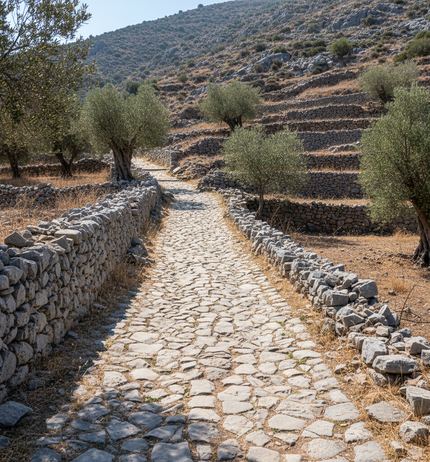
The walking is on kalderimia, mule paths cobbled with limestone by people who needed to get a loaded animal from a village to a threshing floor. Some are eight hundred years old and some were repaired last winter. The stones are polished, they sit at odd angles, and after rain they are slick. Boots, not trainers. Poles help on the way down, and the way down is what tires people. Six walking days: two of nine to eleven kilometres with three hundred metres of climb, three of thirteen to fifteen kilometres with five hundred to seven hundred, and one long day of seventeen. Four to seven hours moving, plus a stop. One day goes up the Viros gorge from the coast, an hour and a half of loose river cobbles in a dry bed with walls six hundred metres above you, then out by a stepped path to a village at five hundred metres. Another is the walk to the cape at the southern tip, four kilometres each way over bare marble slabs with no shade at any point, which in October is pleasant at nine and punishing at two. Water is the thing people get wrong. There are springs on the west side and effectively none south of Areopoli. Two and a half litres each, refilled at the van.
Two rooms, and what each puts within reach
The first is a guesthouse of nine rooms in a village at three hundred metres, twenty minutes above the coast road by car and forty minutes down to the water on foot. Thick walls, a courtyard, breakfast cooked at eight. Two tavernas in the village, one of which shuts on Tuesday. Bread comes out of a wood oven at seven and is gone by ten. Nothing else is within walking distance, which is the point of the place. The second is in a stone town of about eight hundred people near the southern end: one square with four places to eat, a bakery, two grocers and a bus that goes north twice a day. The rooms are inside a tower house that has been divided, so the stairs are stone, narrow and turning, and there is no lift in the building. From here the caves are eleven kilometres, the abandoned tower village is thirty minutes by road and the cape is forty. You repack once, on the sixth morning, and the van carries the bags. That is the whole practical difference from the shape where you unpack on the first evening and do not think about luggage again.
The shoulder here, and the wind
Two windows. Late April to the first week of June, and the third week of September to roughly the twentieth of October. In May the days run nineteen to twenty five degrees and the nights eleven to fourteen, the hills are still green, and the flowers are why half the walkers come at all. In October it is warmer, twenty two to twenty seven by day, the sea is around twenty three and swimmable after a walk, and the first serious rain arrives somewhere in the middle of the month. Rain here does not drizzle. It comes hard for half a day and then stops. Two wet days inside nine nights is an ordinary week and the schedule is built to absorb it: the gorge day and the marble day get moved rather than walked wet. Then the wind. The gulf funnels a northerly that can hold twenty five knots for three days together, and on the exposed ridge at the southern end it is loud enough to end conversation. It is not dangerous on these paths. It is tiring in a way that surprises people who have only walked in still air, and it is worth knowing before you agree to a date. Nobody here will tell you what the weather will do in your particular week.
Who this change suits, and who it does not
It suits someone who can do five or six hours on rough ground on consecutive days and would rather the ground changed under them than stayed the same. It suits people who resent a hire car standing outside a room for four days doing nothing. It suits a pair who like eating in the same three places until the fourth evening, and then doing it again somewhere else. It does not suit knees that dislike long cobbled descents. There are three hundred metre drops on stone in the middle of four of the six days and there is no way round them. It does not suit anyone who wants to be at a beach at four in the afternoon of their own choosing, because the van runs to a time and the water is at the bottom of a path. It does not suit a first walking holiday, and it does not suit children under about twelve. If the appeal of a trip is one bed for the whole of it, this is the wrong page; the shape with one base and a car does exactly that, three hours from more or less the same airport. Say what you are unsure about when you write. The office would rather talk you out of this one than move you along it.
Awkward questions about this change
- Will you book our flights?
- No. This office does not fly people or float them, and has no arrangement with anybody who does. Your flights are yours: book them where you like, then send the arrival date, the time and the terminal, and the ground transfer is built around them. If you are landing after nine in the evening, say so early, because the drive is over three hours and the first guesthouse would rather know than guess. We can tell you which days of the week the road out of Athens is slow in shoulder season. That is the whole of what we do on the subject.
- Is this the climb to the top of the Taygetos?
- No, and it is worth being blunt about it. Profitis Ilias is 2,404 metres, the usual route starts from a hut at about sixteen hundred, and it is a hard day on scree with snow in the gullies until the middle of May. Nothing on these six days goes above roughly nine hundred metres. This trip walks under the wall, along it and round its southern end, on paths built for moving goods rather than for reaching summits. If the summit is what you actually want, this is not it, and you will be told so on the telephone rather than sold the near thing.
- What happens if one of us cannot walk on a given day?
- The driver is there and the road is never far away. Every stage has a road crossing or a village somewhere between the second and the fourth hour, and the collection point can be changed by a telephone call that morning or halfway through the day. One of you can walk while the other is driven to the far end and sits outside a taverna. Nobody is left in a room with nothing to do and no way to move. A dropped day costs nothing extra, because the van is paid for whether it carries two people or one.
- Can we have this in July or August?
- The office does not sell this shape in those months. The marble at the southern end reads thirty six to thirty eight degrees by early afternoon, there is no shade across the four kilometres out to the cape, and the springs on the west side are down to nothing by the end of July. People do walk here in August and some of them enjoy it. This office will not put its name to the arrangement. If July is the only month you have, the sensible answer is a different shape in the book, not this one moved into the heat.
- Who pays whom, and when?
- You pay nothing to this office at any stage. The two guesthouses and the transport firm each hold the booking in your name and each takes your money themselves, at their own desks and on their own terms, usually a deposit when the room is held and the rest as you leave. Whatever we are paid arrives later, from those suppliers, out of their own margin. No card number is taken here, by telephone or otherwise, and none is kept. Prices on this page are from prices in dollars; what you settle will be in euros, and each supplier confirms its own figure when the booking is made.
Others that move the shape about as far
There is no package on this site that somebody has not already asked for, and the thirty in the book are the requests that came back more than once.
-
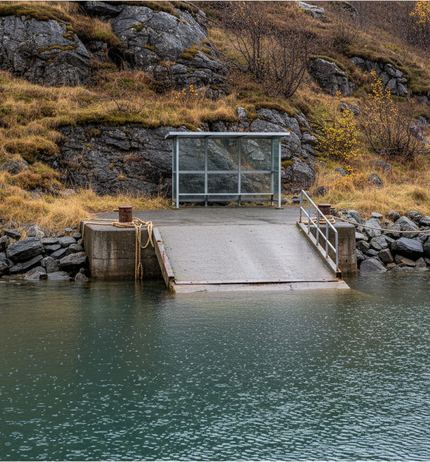
The inner Hardanger
Norway · two bases, ten nights, and boats between them
from $3,620 two sharing two or three parts changed -
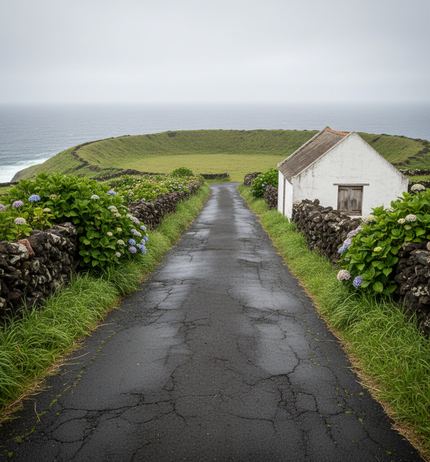
Terceira and the middle islands
Portugal · two bases, twelve nights, no car on one of them
from $3,410 two sharing two or three parts changed -
The Saxon villages of Transylvania
Romania · three bases, a driver, and six of you
from $3,060 two sharing two or three parts changed -
North Jutland and the light
Denmark · two bases, six nights, deep winter
from $2,270 two sharing two or three parts changed -
The Basque interior
Spain · two bases, one of them without a road to it
from $3,240 two sharing two or three parts changed -
The Bohemian uplands
Czechia · three bases, fourteen nights, trains only
from $3,350 two sharing two or three parts changed -
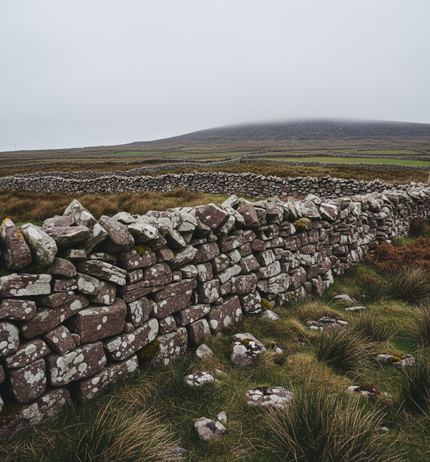
Kerry and the Dingle peninsula
Ireland · two bases, high summer, five of you
from $3,480 two sharing two or three parts changed -
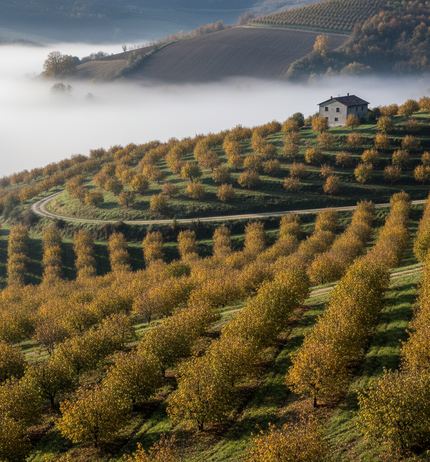
The Langhe and the high Piedmont
Italy · two bases, twelve nights, harvest weeks only
from $3,720 two sharing two or three parts changed
Ask for this change in writing
Not a cent moves through here. The supplier bills you under its own name, and what this office earns reaches it from that supplier weeks later.