Home / Thirty changes / Two or three parts changed / The Basque interior
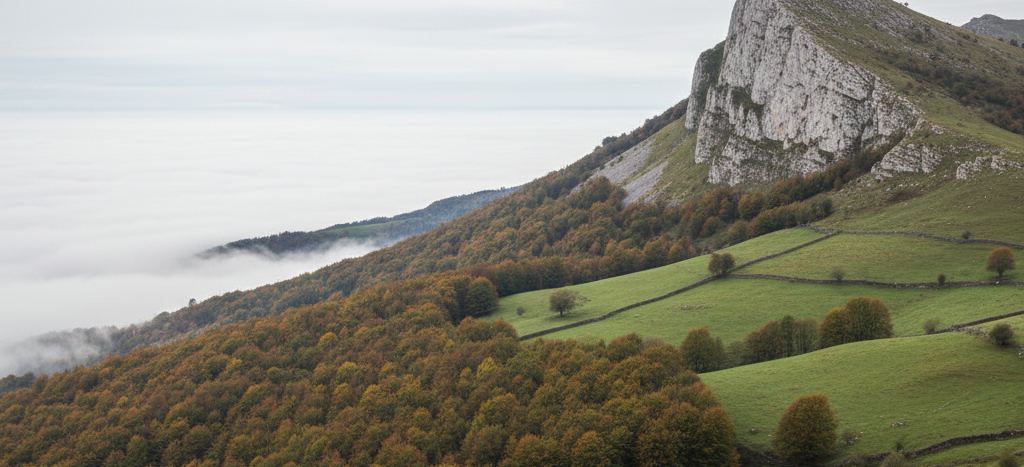
The house shape with its one base broken in two
One base becomes two, and nothing else moves, when you reserve a ten night trip in the Basque interior
The house shape holds one base for eight nights. This one splits it: six nights in a valley town in Gipuzkoa at about 300 metres, then four in a stone house on the shoulder of the Aralar with no road to the door. People who reserve a ten night trip in the Basque interior walk the last thirty five minutes of the journey with their bags, and walk them down again on the last morning.
| What it breaks | two bases, one of them without a road to it |
|---|---|
| Nights | 10 instead of 8 |
| Places you sleep | 2 |
| Car | a hire car, as the shape has it |
| From where you land | 3 hours |
| Season | shoulder |
| People the figure is built on | 2 |
| How far from the shape | two or three parts changed |
| Two sharing pay | from $3,240 |
The part that breaks, and what replaced it
In the house shape you unpack once and sleep in one bed for eight nights. Here that part is taken out. There are two bases and ten nights: six in a valley town in Gipuzkoa at about 300 metres, four in a stone house on the shoulder of a limestone range with no road to the door. Everything else is held. A hire car, shoulder season, two people, out in the morning and back to a bed you already know. The drive from the airport door to the far base runs closer to three hours than two, and the last thirty five minutes of it are walked. Bags go up once and come down once. The price moves from $2,340 to $3,240 for two people, and the difference is the second house, the two extra nights, and ten days of car hire instead of eight. What the change buys is a week of walking that begins at the doorstep, above the cloud that sits in these valleys most mornings in autumn. What it costs, apart from money, is the one thing the house shape is built around: never touching your luggage again after the first evening. If that was the part you liked, this is not the trip for you, and there is no argument to be had about it.
The second base, and the last thirty five minutes on foot
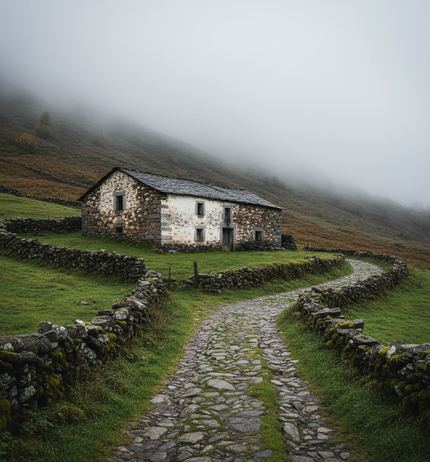
The far base sits at about 700 metres on a shoulder of the Aralar, south of Abaltzisketa. It is a working stone house: walls sixty centimetres thick, a slate roof, a wood stove that is the only heating, four rooms of which you use two. The hot water is good and the electricity is thin, so a kettle and a heater at once will trip something. Phone signal exists on the terrace and nowhere indoors. The track leaves a lane at a metal field gate: 1.6 kilometres of loose stone and mud between drystone walls, climbing about 120 metres, walled tight enough that there is nowhere to turn. No ordinary hire car has the clearance for it in either direction. So the car stays on the verge at the gate for four nights and you walk, thirty five minutes going up with what you can carry, twenty five coming down. There is a wheelbarrow at the top for a second run. The practical result is that you shop once, in the valley, for four days, and you do not nip back down for anything you forgot.
Six nights at 300 metres
The valley base is a flat over a street in a small town in the Goierri, the upper valley of the Oria. Ordizia is fifteen minutes away and holds its market on Wednesday mornings under a colonnaded market house in the square; it has been held on that day since the early sixteenth century, it is a working market rather than a display, it is over by half past one, and the sheep milk cheese on the tables is made in the hills you can see from the door. Tolosa, twenty five minutes down the valley, does the same on Saturday and is larger and noisier. Segura and Zegama are ten and fifteen minutes away and are each two streets of stone houses with coats of arms over the doors and nothing to do but look at them. Oñati is forty minutes over a pass and carries the front of a university built in the fifteen forties, carved to the point of absurdity; from there a narrow road climbs a gorge to a sanctuary at 750 metres. None of these drives is long. All of them take a third longer than the map suggests, because the roads are a lane and a half wide with passing places and lorries full of hay.
What the days consist of
Four of the ten days are walking days and they are not short. From the road head below the pyramid peak at the west end of the range, the usual climb is just under 1,000 metres of ascent and about five hours on the move, with the final two hundred metres on steep grass and rock that turns greasy within minutes of rain. The ridge behind it is easier and stranger: rolling limestone pasture between 1,100 and 1,250 metres, pitted with sinkholes, carrying one of the densest lines of dolmens and stone circles anywhere in this part of Europe, most of them unmarked and easy to walk straight past. A road on the far side reaches a sanctuary at about 1,230 metres, so one high day can be driven when the weather closes. The highest summit in the region, at 1,528 metres, is a separate day from the south. Between the walking days sit two longer drives: terraced salt pans in Álava, worked for something over a thousand years, ninety minutes west; and a river source in Navarre, just over an hour south, which needs a slot reserved in advance because the number of people let in each day is capped. Two days in ten will be spent doing very little. That is the design, not a failure of it.
Weather, and what it takes off the table
These valleys are green because it rains on them. Reckon on 1,400 to 1,600 millimetres a year, and in October on fourteen to sixteen days of the month with rain somewhere in them. Much of it is not rain as an Alabama reader pictures rain, but a fine standing drizzle, sirimiri in the local word, which never looks as though it is wetting you and has gone through a fleece in an hour. Mornings often begin with cloud filling the valley floor to about 600 metres and lifting by eleven, which is half the argument for the high base and the whole complaint about the low one. Two or three days in ten the tops stay in cloud all day and the long walks are off; there is no version of this trip in which that never happens. Two things the season removes outright. The cider houses of the coastal valleys pour from mid January to the end of April, so a May trip catches the last of it and an autumn trip catches none. And the flocks come off the high pastures through October, so the shepherds huts along the ridge are shuttered rather than working.
Who this suits, who it does not, and what $3,240 covers
It suits two people who can walk five hours on rough ground and carry twelve kilos up 120 metres without making an event of it, who are content to shop once for four days, and who would rather have a wood stove and no signal than a lift and a lobby. It suits people who want the second week to feel unlike the first rather than longer than it. It does not suit anyone with a knee or a hip that objects to descent, anyone travelling with a child small enough to be carried as well as the bags, anyone who has to take video calls, or anyone who wants the option of changing their mind on the fourth evening and driving somewhere warmer. There is no road. That is the whole point and it is also the whole problem. From $3,240 for two people, $1,620 each, covering both houses for ten nights and a hire car for the full ten days, arranged and held in your own names. Your flights, fuel, tolls, food, the reserved slot at the river source and anything you decide on the morning are yours. The figure is a starting point for shoulder season dates; the final number is confirmed in writing before anything is held, and Cedar Passage takes no payment and keeps no card details.
Awkward questions about this change
- Can the hire car get to the second base?
- No. The track is 1.6 kilometres of loose stone and mud with a 120 metre climb, walled on both sides with nowhere to turn, and no category of ordinary hire car has the ground clearance for it. The car stays on the verge at the field gate for four nights. You walk up in about thirty five minutes with what you are carrying, and down in about twenty five. There is a wheelbarrow at the house if the shopping is heavy enough to want a second run. This is the detail people underestimate, so it gets said twice before any dates are held.
- Will Cedar Passage arrange the flights?
- No. This office keeps well clear of air and water carriage, and holds no contract with a carrier. Your flights are yours to buy, in your own names, on whatever terms suit you. What the office does is tell you what the ground needs: which airport puts you inside three hours of the far base, how late you can land in October and still walk up in daylight, and why an evening arrival means the first night goes in the valley rather than on the hill. Buy them once the dates are held, not before.
- Is this just the house shape with two extra nights on the end?
- No, and the extra nights are the least of the difference. The house shape is built on unpacking once. This one unpacks twice and spends part of one day moving, which is a real cost inside ten days. The second base also changes the grammar of a day: you leave on foot from the door and the car sits at the bottom of the track, so the walking days and the driving days separate cleanly instead of mixing. That reads as clean to some people and as fuss to others. It is a different shape, not a longer one.
- What if the range is in cloud for all four nights up there?
- Then you walk in cloud or you do not walk. Two or three days in ten is the ordinary run; a solid block of four is uncommon but not rare. The house is a decent place to be rained on, with a stove and room to sit, and the road on the far side of the range reaches a sanctuary at about 1,230 metres, so there is one high thing that stays reachable by car in bad weather. Nobody can move the weather or move the reservation on the morning. The cancellation terms are the ones the two houses set, and they are put in front of you in writing first.
- How is Cedar Passage paid, and what do you hold of ours?
- The two houses and the car firm pay this office a commission out of their own margin, after you have stayed. Nothing is added to your side of the arrangement for it and nothing is taken off. The office takes no money from you at any point and never sees a card number: each supplier collects whatever it collects, from you, on its own written terms, which you read before agreeing to anything. What the office in Birmingham holds is a file. Dates, names, the note about the gate, and the phone number of the farm at the top of the track.
Others that move the shape about as far
There is no package on this site that somebody has not already asked for, and the thirty in the book are the requests that came back more than once.
-
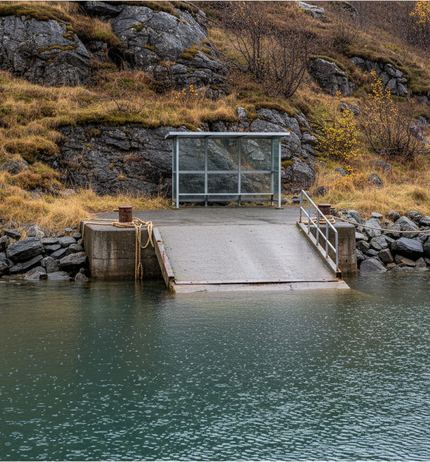
The inner Hardanger
Norway · two bases, ten nights, and boats between them
from $3,620 two sharing two or three parts changed -
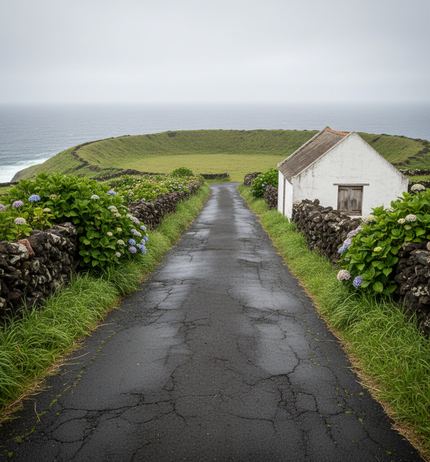
Terceira and the middle islands
Portugal · two bases, twelve nights, no car on one of them
from $3,410 two sharing two or three parts changed -
The Saxon villages of Transylvania
Romania · three bases, a driver, and six of you
from $3,060 two sharing two or three parts changed -
North Jutland and the light
Denmark · two bases, six nights, deep winter
from $2,270 two sharing two or three parts changed -
The Mani and the Taygetos wall
Greece · two bases and a walking week between them
from $2,980 two sharing two or three parts changed -
The Bohemian uplands
Czechia · three bases, fourteen nights, trains only
from $3,350 two sharing two or three parts changed -
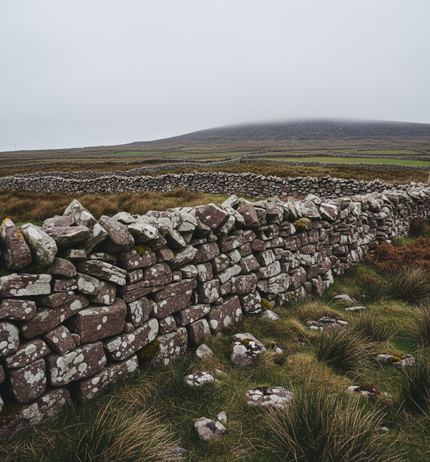
Kerry and the Dingle peninsula
Ireland · two bases, high summer, five of you
from $3,480 two sharing two or three parts changed -
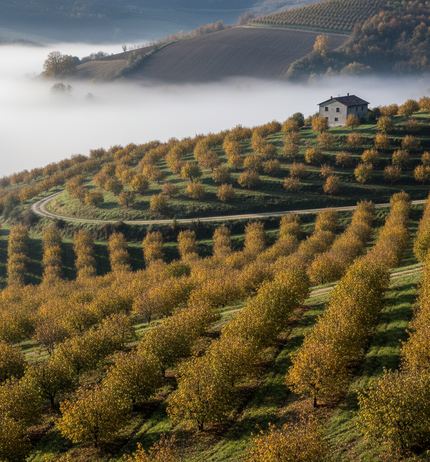
The Langhe and the high Piedmont
Italy · two bases, twelve nights, harvest weeks only
from $3,720 two sharing two or three parts changed
Ask for this change in writing
Not a cent moves through here. The supplier bills you under its own name, and what this office earns reaches it from that supplier weeks later.